
What is the single most important moving part inside your industrial engine? While every component plays a role, the crankshaft is arguably the backbone. This massive, oddly shaped shaft endures incredible forces with every single combustion event, converting the up-and-down motion of the pistons into the turning power that gets work done.
Because it is under so much stress, the surface of the crankshaft where the bearings ride must be perfect. Over time, this surface can wear down, leading to serious engine problems. This guide provides a clear, step-by-step look at crankshaft grinding and polishing, the expert process used to bring this vital component back to life.
The Role of the Crankshaft in Your Engine
Think of the crankshaft as the pedals and axle on a bicycle. Your legs push the pedals up and down (like the pistons), and the crankshaft turns that energy into rotation that moves the wheels. It is the component that transforms linear force into usable torque.
The crankshaft spins on a thin film of high-pressure oil inside a set of bearings. The surfaces where it makes contact, called journals, must be perfectly round, straight, and incredibly smooth. If these surfaces become damaged, the oil film breaks down, leading to rapid wear, heat, and eventual engine failure.
When is Crankshaft Grinding Necessary?
You will rarely see a crankshaft problem, but you will definitely hear or feel it. The most common symptom of a worn crankshaft is a deep, rhythmic knocking sound from the engine, often called “rod knock.” This noise is the sound of excessive clearance between the connecting rod bearing and a worn crankshaft journal.
Other signs include low oil pressure, as the wide gaps allow oil to escape too easily, and finding metallic glitter in your engine oil. These are serious warnings that indicate the need for a complete engine reconditioning. Grinding is the first step in correcting the wear that causes these issues.
A Detailed Look at the Crankshaft Grinding and Polishing Process
Crankshaft grinding and polishing is not a simple repair; it is a precision machining operation that restores the crankshaft to exact factory specifications. It requires expensive, specialized machinery and a highly skilled technician to perform correctly. The process is methodical and follows several critical stages to ensure a perfect outcome.
Each step is designed to check for damage, restore the correct dimensions, and create the ideal surface for long-term reliability. From the initial inspection to the final polish, there is no room for error. Let’s walk through what a professional machine shop does.
Step 1: Inspection and Measurement
Before any work begins, the crankshaft must be thoroughly cleaned and inspected. A technician will first perform a visual check for any obvious damage. Then, they will use a method called magnafluxing to check for microscopic cracks that are invisible to the naked eye.
Next, every journal is carefully measured with a micrometer. The technician measures at multiple points to check for three key things:
- Wear: How much material has been worn away.
- Taper: If one side of the journal is worn more than the other.
- Out-of-round: If the journal has been worn into an oval shape.
Step 2: Setting Up the Grinding Machine
Once the extent of the wear is known, the crankshaft is mounted in a special crankshaft grinding machine. This is not a standard lathe; it is a massive, highly accurate machine designed specifically for this task. The setup is one of the most critical parts of the job.
The technician must perfectly center the crankshaft in the machine. They use dial indicators to ensure it spins with no wobble, as any error here would result in an incorrectly ground journal. This precision setup is essential for a successful repair.
Step 3: The Grinding Process
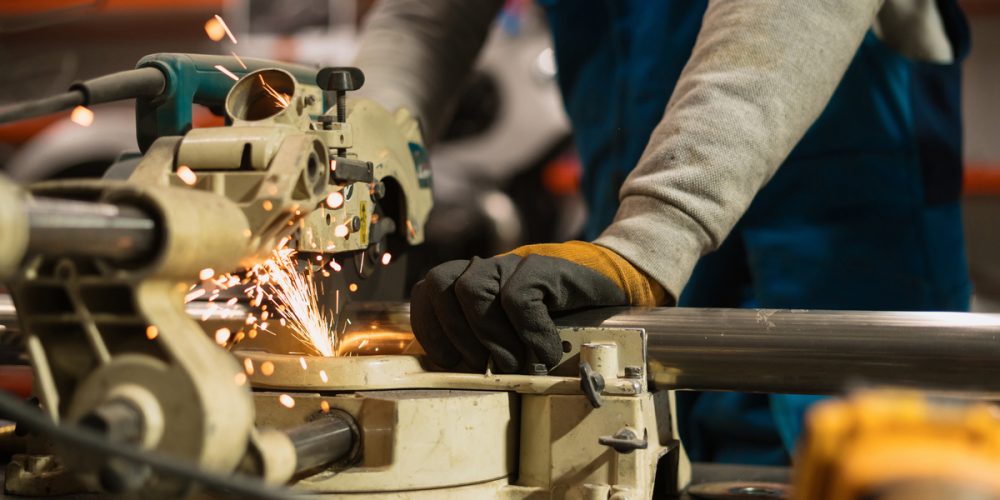
With the crankshaft spinning slowly, a large, high-speed grinding wheel is brought into contact with the first journal. A constant flow of coolant is used to prevent overheating, which could warp the crankshaft. The grinding wheel carefully removes metal until the journal is perfectly round and clean again.
The technician grinds the journal down to a specific “undersize” dimension. This allows a new, thicker bearing to be used, bringing the total clearance back to the original factory specification. Great care is taken to grind the correct fillet radius—the small, curved area where the journal meets the main body of the crank—as a sharp corner here could cause the crank to break under stress.
Step 4: The Final Polish
After grinding, the journal surface is accurate in size but is still too rough for engine bearings. The final step is to polish it to a mirror-like finish. The grinding wheel is replaced with a tool that holds a fine-grit abrasive belt.
This belt spins against the journal, removing the microscopic peaks left by the grinding process. The technician continues polishing until the surface finish is within the manufacturer’s specified range. This super-smooth surface is what allows the oil film to properly support the crankshaft.
Why Polishing is Just as Important as Grinding
The final polishing step might seem minor, but it is just as crucial as the grinding itself. An improperly polished crankshaft will cause premature bearing failure, even if the ground dimensions are correct. The quality of the polish directly impacts engine life.
A correctly polished surface does several things for your engine. It ensures the component can perform reliably for thousands of hours under extreme loads. Here are the main benefits:
- It dramatically reduces friction between the crankshaft and the bearings.
- It allows a stable, unbroken film of oil to form.
- It prevents microscopic pieces of metal from breaking off and contaminating the oil.
- It is essential for a long and trouble-free service life.
Common Mistakes to Avoid in Crankshaft Repair
While the process seems straightforward, there are several common mistakes that can ruin a crankshaft and, eventually, the entire engine. This is why you should always trust this job to an experienced professional. A small error in the machine shop can lead to a catastrophic failure in the field.
Here are four common errors that must be avoided:
- Incorrect Fillet Radius: Grinding a sharp corner instead of a smooth, rounded one creates a stress point where the crankshaft can crack and break.
- Improper Surface Finish: A surface that is too rough will act like sandpaper and destroy the bearings. A surface that is too smooth, like chrome, will not hold the necessary oil film.
- Ignoring Straightness: A bent or warped crankshaft must be straightened before grinding. Grinding a bent crank will only result in bent-but-shiny journals that will wipe out the bearings and damage the cylinder block.
- Skipping the Final Cleaning: After polishing, the crankshaft must be meticulously cleaned. Any leftover abrasive particles will circulate in the engine oil and cause widespread damage.
Conclusion: A Foundation for a Reliable Engine
Crankshaft grinding and polishing is a foundational part of any quality engine rebuild. It is a precision process that restores the most critical surfaces inside your engine to their exact original specifications. Grinding ensures the dimensions are correct, while polishing creates the perfect surface for a long and reliable service life.
This is not a task for a general repair shop; it requires specialized machinery and deep expertise to do correctly. At Merdeka Precision, we provide expert crankshaft services for a wide variety of industries. Our skilled technicians and state-of-the-art equipment ensure that every crankshaft we service is ready for thousands of hours of demanding work. If your engine needs a new lease on life, contact us to learn more about our comprehensive services.
What is the most important lesson you have learned about engine maintenance over the years? Share your thoughts in the comments below.