
Have you ever stopped to think about how many individual parts make up the car you drive every day? A modern vehicle is a complex assembly of over 30,000 components, and for the car to work safely and efficiently, every single one of those parts must fit together perfectly. This incredible level of accuracy is not an accident; it is the result of a highly skilled manufacturing process.
This process is the invisible backbone of the entire automotive world. It works behind the scenes to create the strong, reliable, and intricate parts that keep your car moving. This is the world of precision machining for automotive parts, a field where a fraction of a millimeter can make all the difference.
What Is Precision Machining?
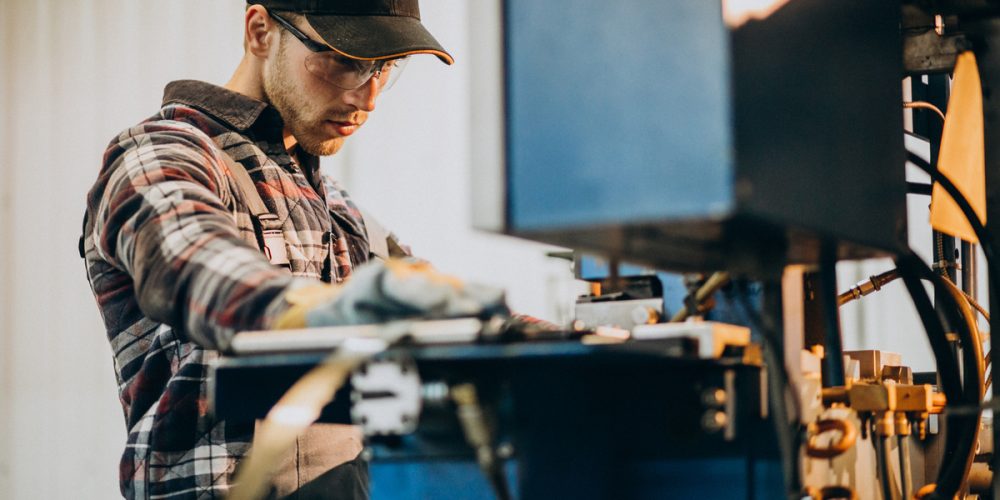
Precision machining is a process where raw material is carefully cut and shaped into a finished part with extremely tight tolerances. Think of a master sculptor carving a statue from a block of marble, but instead of a chisel, the tool is a computer-controlled machine. And instead of marble, the material is a block of high-strength steel or lightweight aluminum.
This method uses advanced equipment, most notably Computer Numerical Control (CNC) machines. A digital design is programmed into the machine, which then automatically removes material to create a part that is an exact match to the blueprint. This technology allows for the creation of complex shapes with a level of accuracy that would be impossible to achieve by hand.
Why Is Precision So Critical in the Automotive Sector?
In the automotive industry, there is very little room for error. The performance, efficiency, and most importantly, the safety of a vehicle depend on the perfect fit and function of its components. A tiny flaw or an incorrect dimension in a critical part can lead to serious problems.
Imagine a brake caliper where the piston bore is just slightly too large or a connecting rod in the engine that is a few grams too heavy. These small mistakes could lead to brake failure or catastrophic engine damage. This is why the standards for precision machining for automotive parts are so incredibly high; it is a process that directly contributes to keeping drivers and passengers safe.
Key Automotive Components Made with Precision Machining
If you could look inside your car’s most important systems, you would find precision machined parts everywhere. From the engine that creates power to the brakes that stop you, these components are the building blocks of modern vehicles. Their reliability is a direct result of the accuracy with which they were made.
The creation of these parts is a core function of the automotive industry. Let’s look at some specific examples to understand how this technology is used in different areas of a car.
Engine Components
The engine is the heart of any vehicle, and it is full of parts that move at high speeds under intense pressure and heat. Components like the crankshaft, camshafts, pistons, and the engine block itself must be machined to incredibly fine tolerances. This accuracy ensures proper compression, correct valve timing, and a balanced rotation, all of which are essential for a smooth and powerful engine.
The surfaces inside the engine are especially important. For example, the inner walls of the cylinders must be perfectly round and have a specific surface finish to allow the piston rings to seal correctly. This is achieved through expert cylinder block services that are a key part of engine manufacturing and reconditioning.
Transmission and Drivetrain Parts
The transmission is what transfers power from the engine to the wheels. It is a complex assembly of gears, shafts, and other components that must work together seamlessly. The teeth on each gear must be perfectly shaped to mesh with other gears without slipping or causing excess wear.
Precision machining ensures that every gear, shaft, and housing in the transmission and drivetrain fits perfectly. This allows you to shift gears smoothly and efficiently. It also reduces noise and vibration, making your ride quieter and more comfortable.
Braking System Components
When it comes to safety, no system is more important than your brakes. The parts that make up your braking system, such as brake calipers, rotors, and master cylinders, are all created using precision machining. The smallest error in these parts is simply not acceptable.
The internal passages of a brake caliper and the surface of a brake rotor must be perfectly smooth and dimensionally accurate. This ensures that the brake pads apply even pressure and that the hydraulic fluid flows correctly. The reliability of your brakes is a direct result of the precision used to make them.
Suspension and Steering Parts
How your car handles on the road is determined by its suspension and steering systems. These systems are made of many interconnected parts, like control arms, knuckles, and ball joints. The holes, bores, and mounting surfaces on these components must be in exactly the right place.
This accuracy ensures that your wheels are correctly aligned and that you have responsive control over the vehicle. It also contributes to ride quality by allowing the suspension to absorb bumps in the road as it was designed.
The Machining Process: From Design to Part
Creating a precision automotive part is a multi-step process that starts long before any metal is cut. It is a journey from a digital idea to a physical object. The process ensures that every single part produced is identical and meets the required quality standards.
Here is a simple breakdown of the typical workflow:
- CAD Design: The process begins with an engineer creating a detailed 3D digital model of the part using Computer-Aided Design (CAD) software.
- CAM Programming: This digital model is then loaded into Computer-Aided Manufacturing (CAM) software, which generates the toolpaths and specific instructions for the CNC machine.
- Machine Setup: A block of raw material, such as steel or aluminum, is securely placed and aligned within the CNC machine. The correct cutting tools are loaded into the machine’s turret.
- Machining: The CNC machine executes the program, automatically cutting, drilling, milling, and turning the material to create the final shape. A coolant fluid is used to keep the tool and the part from overheating.
- Quality Control: After the part is made, it is thoroughly inspected. Technicians use advanced measuring tools like coordinate measuring machines (CMMs) and laser scanners to verify that every dimension is within the specified tolerance.
Materials Used in Automotive Precision Machining
The choice of material is just as important as the machining process itself. Different parts of a car have very different needs, so engineers choose from a wide range of materials. The material must be strong enough for the job, but also suitable for the machining process.
Here are some of the common materials used in the automotive sector:
- Aluminum: This material is popular because it is lightweight and resistant to corrosion. It is often used for engine blocks, wheels, and transmission casings.
- Steel and Stainless Steel: Known for their strength and durability, steel alloys are used for high-stress parts like gears, axles, and crankshafts.
- Titanium: This material has a very high strength-to-weight ratio, making it ideal for high-performance and racing vehicles. It is used for parts like connecting rods and valves.
- Plastics and Composites: Modern cars use many advanced plastics for things like intake manifolds, interior components, and sensor housings.
Conclusion: The Unseen Force of Modern Vehicles
Precision machining is truly the unsung hero of the modern automotive industry. It is the fundamental process that makes the safety, reliability, and performance of today’s cars possible. From the most powerful engine to the simplest bracket, every component relies on being made to an exact standard.
Next time you get in your car, remember the incredible engineering and manufacturing that went into it. The smooth ride and dependable operation are a testament to the skill and technology behind every single part. The future of the automotive world will continue to depend on this amazing level of accuracy.
At Merdeka Precision, we are proud to be a part of this vital industry. Our advanced precision component manufacturing capabilities allow us to produce complex automotive parts that meet the highest standards of quality. Our wide range of services is designed to support the needs of our clients in the automotive sector and beyond. To find out how we can help with your manufacturing needs, please contact us.
What other everyday objects can you think of that must rely on a similar level of manufacturing precision?